Geometry score
Around average
Evenly proportioned. The quickest gains are hair shape and a touch of colour.
Your face is evenly proportioned and close to symmetrical, so this report leaves your features alone. The photo is already sharp and softly lit. What holds it back is hair that sits flat and straight down, a neutral expression, and a look with no colour on the lips or brows.
- Face shape
- Oval
- Colours
- Clear Winter
- Apparent age
- 30–38
02 / New look
Your new look, before and after
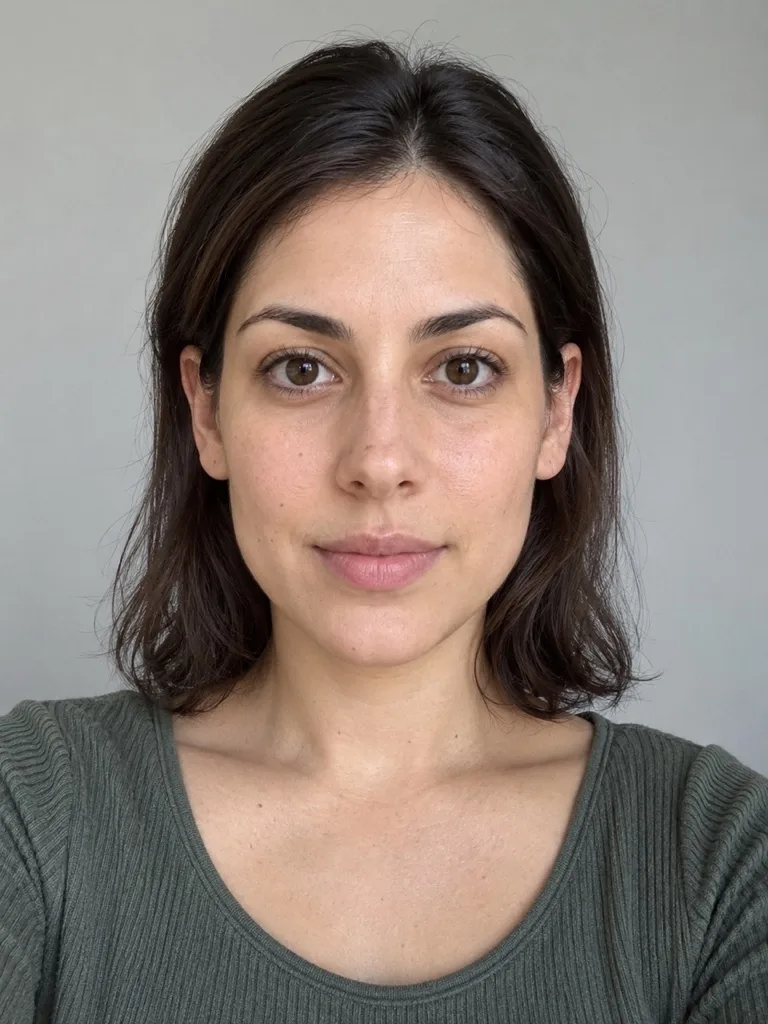
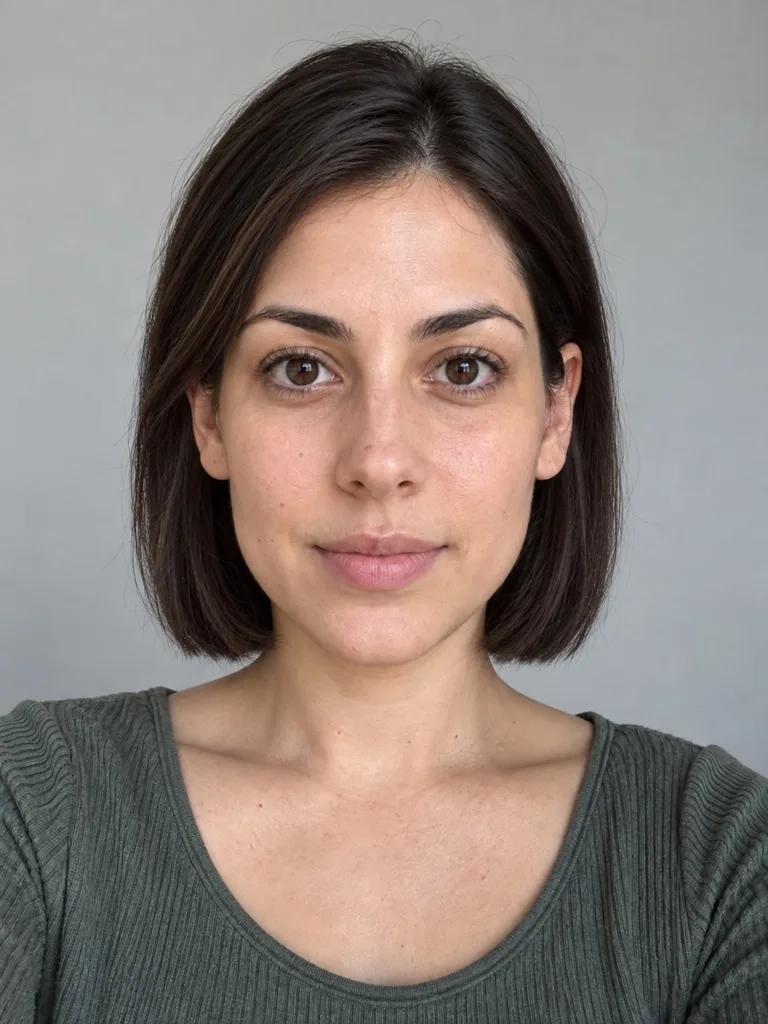
Sleek blunt bob
The line at the chin adds width at the jaw, where yours is narrower than the cheekbones, and a soft side part keeps the oval balanced. A clean, polished shape that photographs well.
See all 3 styles and the barber card03 / At a glance
At a glance
Strongest
Length to widthYour face length and width are in a balanced ratio.See why →Change first
The shape of your hairYour hair falls straight and flat at the crown; a cut with a defined line at chin level gives the outline structure.See why →Try first
Sleek blunt bob5–8 min a day · Every 6–8 weeksSee why →Your colours
Clear WinterClear, high-contrast and cool colours.See why →Do this today
Take a burst of photos with a soft, relaxed smile.
Ten minutes, free, and it is the quickest way to make the same face read warmer.
04 / Proportions overview
Proportions overview
In shortAll four parts are measured from this photo; the details for each feature follow.
05 / Feature by feature
Feature by feature
Eyes and brows
Reference: 0.20, one fifth of face width
Reference: 0.20, one fifth of face width
Lower than most faces in the reference set
Higher than most faces in the reference set
What we see
Your eyes are a little wide for your face, and the gap between them is a little wider than one eye, closer together than on most faces. Your outer eye corners sit higher than the inner ones, more than on most faces.
What you can change
Brows: keep their natural shape and only tidy the few stray hairs between them. A soft brow pencil, one shade lighter than your hair, can fill sparse spots at the tails; nothing else in the eye area needs changing.
In shortClose-set eyes with lifted outer corners and full, dark brows.
Nose and mouth
Inside the typical range
Higher than most faces in the reference set
What we see
Your mouth is a little wider than your nose, which is typical. Your mid-face, brows to nose base, takes up a larger share of your face than on most faces, and your lower face a smaller one.
What you can change
Lip colour is the reversible lever: a shade one or two steps deeper than your own lips, such as the hot pink or true red in your palette (sheer, not heavy), defines the mouth in photos without changing its shape.
In shortA typical mouth-to-nose balance; colour on the lips is the only lever and it is a makeup one.
Jaw and chin
Lower than most faces in the reference set
Inside the typical range
Higher than most faces in the reference set
Lower than most faces in the reference set
What we see
Your jaw is narrower than your cheekbones (narrower than on most faces), your chin is typical in width compared with the jaw, and your jaw corners are softer than on most faces.
What you can change
Hair length is the lever: a cut that ends at the chin or jaw line adds width there. See the hairstyles below.
In shortA soft jaw, narrower than the cheekbones; hair length sets the outline.
Face shape
OvalInside the typical range
Inside the typical range
Lower than most faces in the reference set
Inside the typical range
Higher than most faces in the reference set
What we see
Your face is a typical length compared with its width at the cheekbones, and your forehead is close to the cheekbones in width. With the narrower jaw, that is what the face-shape rules call oval.
What you can change
Side volume and a parting keep an oval balanced; extra height at the crown would only add length. See the hairstyles below.
In shortA typical length-to-width balance; volume at the sides rather than the top.
06 / Skin
Skin in this photo
In this light your tone looks fairly even, with a few light freckles across the nose and cheeks. There is a little natural shine on the cheeks and nose tip, which flat frontal light makes easy to see.
A simple daily routine
- EveningA gentle, fragrance-free cleanser.
- MorningA light moisturiser.
- DailyBroad-spectrum SPF 30 or higher, also on cloudy days.
- Before photosBlot shine on the cheeks and nose tip with a tissue.
This describes how your skin looks in this photo and light. It is not a diagnosis, and light changes it a lot.
07 / This photo
How this photo comes across
Soft, even light and a sharp photo; the head is tilted a little.
A neutral, closed mouth that reads a little reserved.
Head turned square to the camera and eyes straight on the lens.
Flat at the crown and straight past the cheeks, with some flyaways.
No colour on the lips or brows, so the face reads very soft.
A dark green knit that sits well with your colouring.
08 / Strengths
Your strengths
Soft, even light
Both cheeks are lit about equally and the photo is sharp, so nothing hides the face.
Balanced and symmetrical
The left and right sides of your face match closely, and its length-to-width balance sits in the typical range.
A top that matches your colouring
The dark green knit is close to the emerald in your palette and keeps attention on the face.
09 / Your plan
Your plan, in order
Ordered by effect for the effort. Start at the top.
Swap the neutral face for a soft smile
Why
A closed, neutral mouth reads reserved. A small smile that reaches the eyes reads warmer, and it lifts the cheeks slightly in the frame.
Why first: It is free, takes ten minutes, and changes how every other part of the photo reads.
How
- Take a burst of 10–20 shots while thinking of something funny.
- Pick the shot where your eyes look most relaxed, not the widest smile.
- Keep the camera at eye level and the head level.
Result
A warmer, more approachable first impression from the same face.
Or instead
A soft closed-mouth smile, if a full smile feels forced.
Trade-off
An open smile looks friendlier; a closed one looks calmer and more composed.
Add a little colour to lips and brows
Why
With no colour on the lips or brows, the face fades into the skin tone. A little colour gives the eyes and mouth definition without changing how you look.
How
- Lips: a tinted balm or lipstick in a clear rose or true red from your palette.
- Brows: brush them up, then fill sparse spots at the tails with a pencil one shade lighter than your hair.
Result
A face with a clearer focal point, in the same colours as your palette.
Or instead
A tinted lip balm only, if you prefer no makeup.
Trade-off
Takes two or three minutes each morning; skipping it brings back the soft, bare look.
Cut the length to a blunt line at the chin
Why
Your hair falls straight and flat. A blunt cut that ends at the chin adds width at the jaw, where yours is narrower than the cheekbones, and gives the outline a clean shape. It needs only a few minutes of styling.
How
- Show your stylist the card in the hairstyles section.
- Blow-dry with a round brush, turning the ends under very slightly.
- Finish with a drop of smoothing serum on the ends to calm the flyaways.
Result
A tidy outline with a clear line at the jaw that holds through the day.
Or instead
Soft layers just past the shoulders, if you want to keep the length.
Trade-off
Needs a trim every 6–8 weeks to keep the line sharp.
10 / Hair & style
Hairstyles and styling
Your hair now: ends past the shoulders
Sleek blunt bob
The line at the chin adds width at the jaw, where yours is narrower than the cheekbones, and a soft side part keeps the oval balanced. A clean, polished shape that photographs well.
Trade-off: The sharp line needs regular trims and a quick blow-dry.
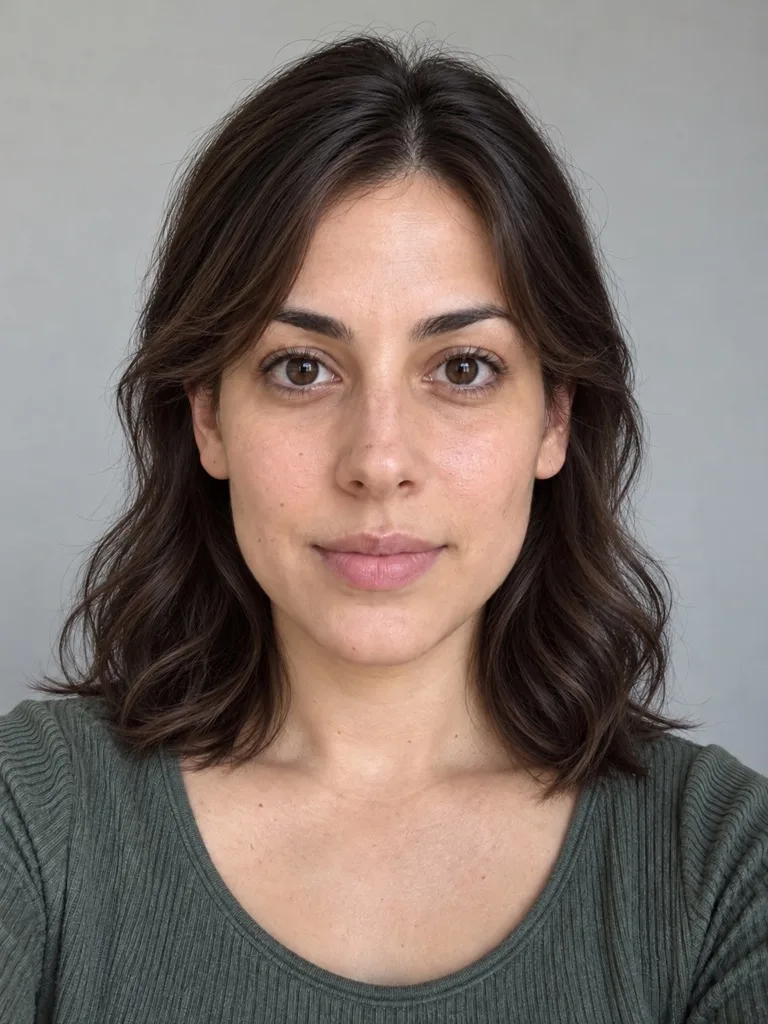
Soft layers with a curtain fringe
Layers past the shoulders and loose waves add width beside the jaw, and a centre-parted curtain fringe frames the cheekbones. It keeps most of your length.
Trade-off: Looks best with a little styling; air-dried it falls flatter.
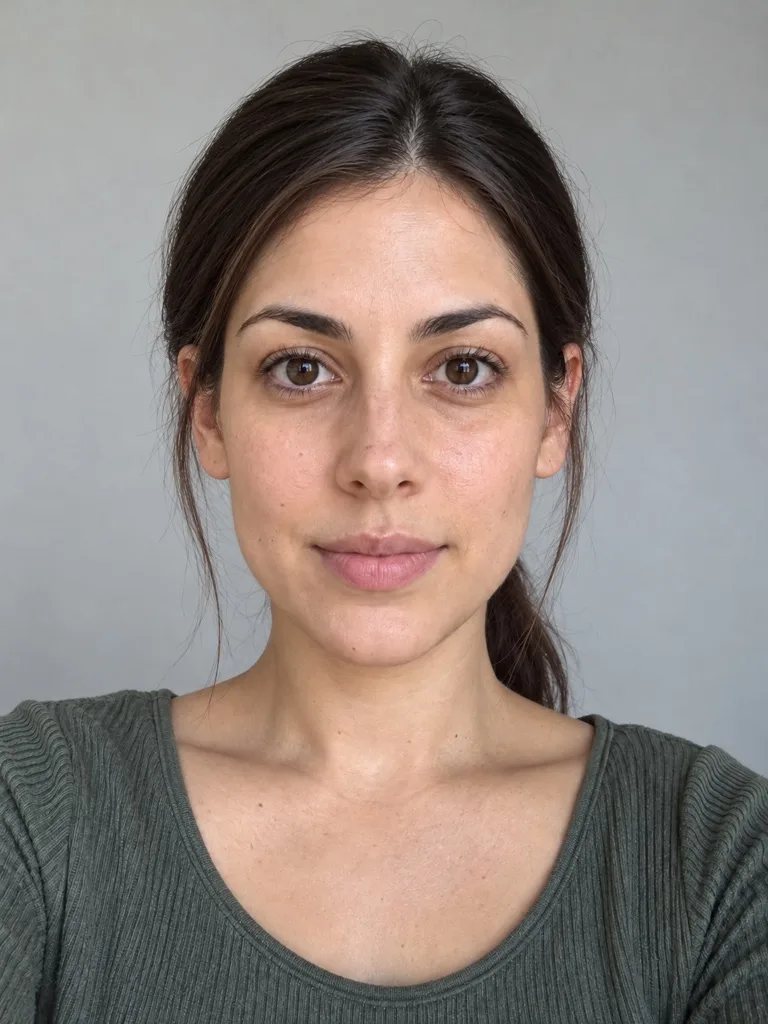
Low sleek ponytail
The lowest-effort option and the one that shows your face most. Pulled back, the cheekbones and eyes become the focus; the few loose strands at the temples soften the outline.
Trade-off: It shows the whole face and gives no width at the jaw; less soft than the bob.
Show this to your barber
Style 1Sleek blunt bob
- · Length: one blunt line at the chin, no layers.
- · Part: soft side part, on the side the hair already falls.
- · Ends: turned very slightly under, not flipped.
- · Back: just above the nape, with a clean line.
Makeup
A clear rose or true red on the lips, a soft grey-brown on the lids, and brows filled one shade lighter than your hair. Keep the base light; your skin looks even enough without coverage.
Glasses
Soft-square or slightly rounded frames in a thin metal or tortoiseshell, about as wide as your cheekbones. Very heavy frames will sit low on a face with this length.
Outfit
Clear colours near the face, like the cobalt, emerald and navy in your palette. Scoop and V necks keep attention on the face; black or optic white work well with your contrast.
11 / Colours
Your colour palette
Your season
Clear Winter
Next closest: Cool Winter
Undertone: cool · Depth: medium · Clarity: clear
A cool undertone, deep dark-brown hair and eyes, and high contrast between them in a clear, cool palette. Clear, cool colours such as cobalt, emerald and hot pink repeat that; muted, golden or earthy colours look softer than your own contrast.
Wear more often
Wear less near your face
Colours are sampled from this photo and change with light. The palette describes colours that sit well together; it says nothing about ethnicity.
12 / Timeline
Timeline
Today
This week
Next haircut
Weeks 1–4
13 / Look-alikes
Look-alikes and apparent age
Apparent age in this photo
30–38
For fun. Look-alikes describe general features in your photo; they are not face matching and imply no connection with these people. Shown only in your private report.
14 / Photo guide
How to take a better photo
Light
This light is already good: soft daylight from the front. Keep facing a window and avoid overhead lamps.
Angle
Keep the camera at eye level and the head level; here the head is tilted a little, which a lower or higher camera exaggerates.
Distance
Hold the phone at arm’s length, or use a 2× lens from a little further back. Your face should fill about a quarter of the frame.
Background
A plain wall is fine for this report. For dating apps, an outdoor or lived-in background tells people more.
Choosing your main dating-app photo
- · Only you in the photo, face clearly visible, no sunglasses.
- · Natural light and a genuine smile matter more than the setting.
- · Chest-up framing for the first photo; a full-body one later in the set.
15 / Limits
What this report can't do
- One front-facing photo can't measure your profile, bone structure or how your face moves.
- Scores describe this photo, in this light. Another photo can score differently.
- We don't recommend surgery, fillers, injections or any medical procedure.
- The skin section describes appearance in this photo. It is not a diagnosis and doesn't identify any skin or health condition.
- Colour season, look-alikes and apparent age are for fun. Look-alikes describe general features; they are not face matching.
- Scoring version
- Scoring v1
- Report version
- report-1.1
- Colour rules
- color-1.3
16 / Save & delete
Save or delete
attractivenesscheck.com · Scoring v1 · This report is for reference only and is not medical advice. It does not diagnose or assess any skin or health condition. Scores describe how this photo comes across, not your worth as a person.